Activated sludge experience summary
1. What is activated sludge?
Activated sludge is a flocculent with strong adsorption and decomposition capabilities. The core of activated sludge lies in the word "alive". As we all know, natural rivers have self-purification functions. This is because there are a group of microorganisms living in the water. The microorganisms eat the pollutants, so the water will become clean again. So "alive" is reflected in the group of microorganisms.
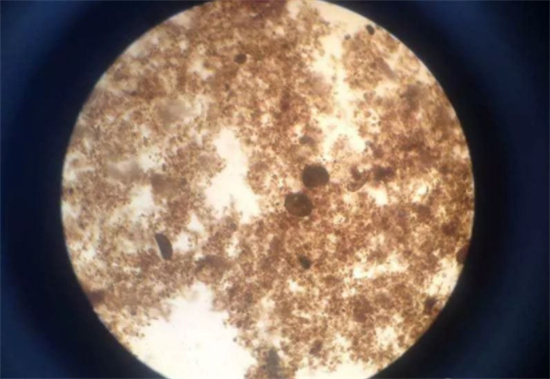
Microorganisms are part of activated sludge. In addition, activated sludge also includes residues produced by microbial metabolism, organic matter and inorganic matter adsorbed on microorganisms. The mixed liquid in the aeration tank that you usually see is the form of activated sludge in water.
2. What is the relationship between flocs and filamentous fungi? What are their functions?
Flocs and filamentous bacteria are important components of activated sludge.
Flocs are formed by flocculant bacteria with mucus or capsules, which can absorb impurities and free microorganisms in wastewater. Flocs make activated sludge have good sedimentation properties and protect micro-animals in wastewater from being swallowed or poisoned.
Filamentous bacteria are the skeleton of activated sludge. They continue to grow and elongate under the attachment of bacterial flocs, which can make flocs form larger particles while maintaining the looseness of the activated sludge.
Filamentous bacteria and bacterial jelly belong to the relationship where you are strong and I am weak. Filamentous bacteria can grow well under the attachment of bacterial jelly, but exposure to mixed liquid is not conducive to their growth. When in a low-oxygen environment, filamentous bacteria multiply and cause sludge to expand.
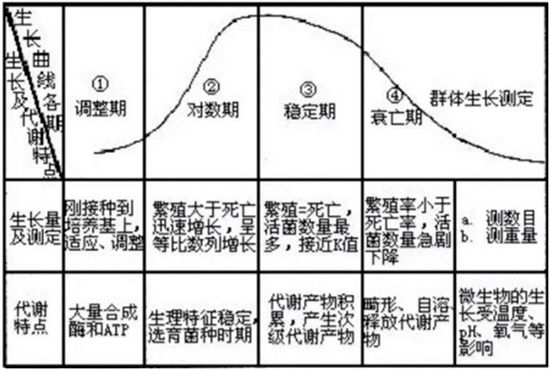
3. Growth curve of activated sludge
4. Activated sludge performance indicators
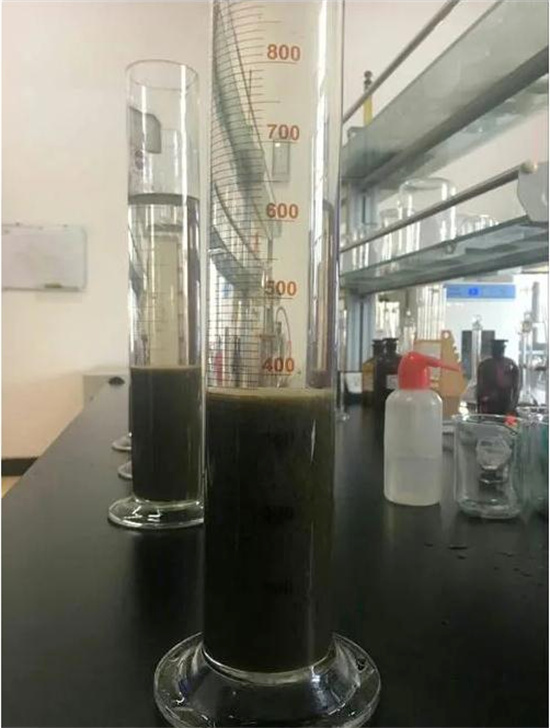
There are three performance indicators of activated sludge: sludge settling ratio SV, sludge concentration MLSS and sludge volume index SVI.
SV is easy to measure, but the result cannot fully reflect the nature and quantity of sludge. The normal SV value of urban sewage treatment plants is generally between 20% and 30%, while the normal SV value of some industrial wastewater treatment plants is above 90%. Therefore, each sewage treatment plant should determine the optimal SV value of the plant based on its own operating experience.
MLSS can reflect the amount of sludge. The mixed liquor in the aeration tank must maintain a relatively fixed sludge concentration to maintain the treatment effect and stable operation of the treatment system. Each activated sludge process has its own optimal sludge concentration.
SVI can comprehensively reflect the sludge coagulation and sedimentation performance. Generally speaking, if SVI is too low, it means that the sludge particles are small and lack activity; if SVI is too high, it means that the sludge sedimentation performance is poor and sludge bulking is about to occur or has already occurred.
The reasons for the increase in SVI of the aeration tank mixed liquid are as follows:

5. Indicative role of microorganisms
(1) The protozoa that appeared were mainly sessile ciliates, such as the genera of Campanula, Cladosporium, Capsicum, and Polycystis, indicating that the sludge had good coagulation and sedimentation performance. In addition, metazoa such as rotifers were found during microscopic examination;
(2) When a large number of swimming ciliate protozoa, such as bean-shaped worms, kidney-shaped worms, and paramecium, appear, it means that the activated sludge flocs have not yet formed a good state and are in the aeration start-up stage;
(3) When a large number of worms appear in the aerated mixed liquid, it indicates that anaerobic reaction has occurred in the aeration tank;
(4) When a large number of amoeba and rotifers multiply in the mixed liquor, it indicates excessive aeration and poor settling performance of activated sludge.
(5) When a large number of protozoa such as Euplotes, Saddleback Rotifer, and Heterocaudal Rotifer appear, it indicates that the influent concentration is extremely low;
(6) When the number of shield ciliates decreases sharply, it means that the mixed liquid has impact load and toxic substances entering;
(7) When flagellates are present (usually only the genera of Botrytis and Trichomonas), it indicates that the performance of activated sludge is poor;
(8) When both protozoa and metazoa disappear, it indicates that the activated sludge state has deteriorated extremely;
(9) When slowly swimming or crawling protozoa such as the genera of Wandering Worms, Oblique Tube Worms, and Acrohylozoa appear (similar to the aeration startup stage), it means that the condition of the activated sludge is gradually improving.
6. Causes of filamentous fungus expansion
Because filamentous fungi have a large surface area, they have an advantage over floccules in competing for food in a mixed solution, resulting in massive reproduction and expansion. For example, they compete for carbon sources and other nutrients.
Also, because the surface area of filamentous fungi is large, under the condition of suitable water temperature, filamentous fungi are more conducive to growth than bacterial flocs, thus leading to expansion;
Filamentous bacteria are suitable for production under low oxygen conditions, so when dissolved oxygen is reduced, filamentous bacteria can expand;
When the pH is low, it is conducive to the survival of filamentous fungi, but not to the survival of flocs, thus causing excessive reproduction of filamentous fungi.
7. Causes of non-filamentous bacterial expansion
The expansion of non-filamentous bacteria is the deterioration of activated sludge settling performance caused by abnormal physiological activities of bacteria in the micelle.
This type of sludge expansion can be divided into two types: one is due to too much dissolved organic matter in the influent, which makes the sludge load F/M too high, while there are too few nutrients such as nitrogen and phosphorus, or there is insufficient dissolved oxygen in the mixed liquid.
Another type of non-filamentous bacteria is that the influent contains more toxic substances, which leads to activated sludge poisoning. The bacteria cannot secrete enough sticky material to form flocs, and thus cannot separate mud and water in the secondary sedimentation tank, resulting in sludge disintegration.
In fact, more than 90% of sludge bulking is caused by filamentous bacteria, and less than 10% is caused by non-filamentous bacteria.
8. Causes of sludge aging
When observing the sludge aging phenomenon from the surface, it is mainly manifested as: the activated sludge is dark in color and the biological flocculation ability becomes poor; biological foam accumulates on the surface of the aerobic tank; the sludge flocs have good compressibility, but small activated sludge flocs that are difficult to settle will remain in the supernatant, making the effluent turbid; sometimes there will be a thin layer of floating sludge in the secondary sedimentation tank that affects the effluent quality.
There are two reasons for this phenomenon.
1. First, the aerobic system is running at high load. At this time, the mixed liquid contains sufficient organic matter, and the synthesis and decomposition of microorganisms are vigorous, resulting in excessive sludge production;
2. The new sludge flocs have poor settling performance, and the supernatant is rich in free bacteria, causing turbid water.
Secondly, under low-load operation, the anabolism of microorganisms is dominant, and oxygen is mainly used for endogenous respiration. In this way, sludge aging will occur.
9. Reasons for activated sludge floating
Excessive surfactants and oils; pH value is too low or too high; salt content is too high or varies too much; water temperature is too high or too low; highly toxic substrates; excessive aeration; lack of oxygen in the mixed liquor; nitrogen production by denitrification; excessive reflux volume; too much sludge in the secondary sedimentation tank; excessive growth of filamentous bacteria.
10. Daily Operation Concerns of Activated Sludge Process
Observe the color and smell of activated sludge;
Observe the aeration effect;
Pay attention to aeration time;
Pay attention to the amount of aeration;
Pay attention to the discharge of residual sludge;
Pay attention to the amount of return sludge;
Observe the sludge condition in the secondary sedimentation tank.