IC reactors: Understand these points to avoid investment pitfalls!
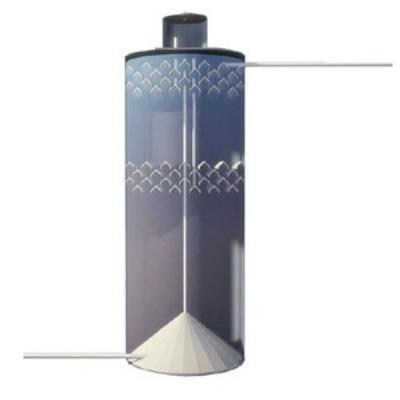
The internal circulation (IC) reactor is a third-generation high-efficiency anaerobic reactor, consisting of five functional zones: a mixing zone, a first anaerobic zone, a second anaerobic zone, a sedimentation zone, and a gas-liquid separation zone. It employs a two-layer UASB reactor series structure. It has been widely used in the treatment of high-concentration organic wastewater from industries such as soybean protein, cottonseed protein, starch, starch sugar, alcohol, enzyme preparations, citric acid, xanthan gum, and biopharmaceuticals. With its advantages of high load capacity, high-efficiency methanogenesis, energy saving, and environmental friendliness, it has become the preferred process for treating high-concentration organic wastewater.
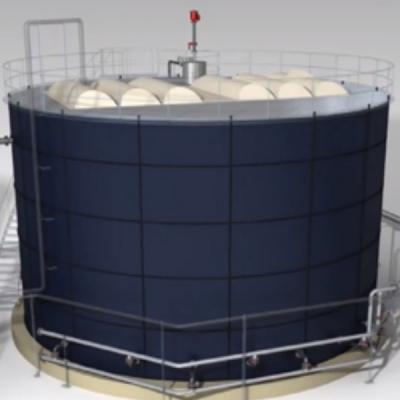
However, the market is flooded with IC cans, all of which look like large steel containers, but their internal structures and quality can vary drastically. A poorly designed IC can can become a wound that "bleeds continuously" in future operations—leading to inefficiency, frequent maintenance, and soaring operating costs.
Today, let's become "equipment detectives," stripping away the glamorous exterior and getting straight to the heart of the matter to see what makes a high-quality IC can so "good."
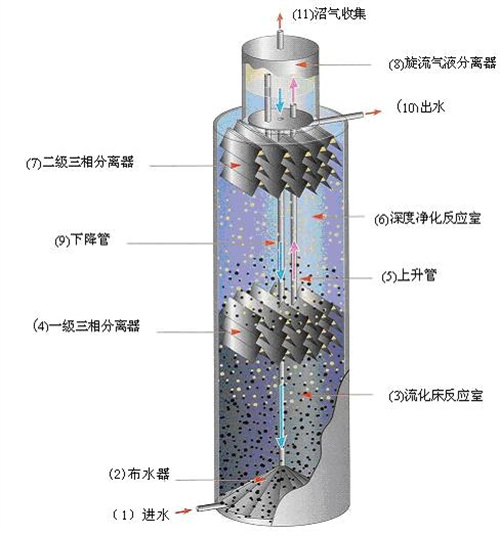
I. Core Internal Organs – Three Golden Standards for Good Structure
To judge the quality of an IC can, you must not only look at the outer shell, but also at its internal components.
01Water distribution system
If we compare the IC tank to a living organism, the water distribution system is the "heart valve" responsible for delivering nutrients.
A good water distribution system, like a carefully designed showerhead, ensures that wastewater is evenly and steadily distributed to the entire bottom of the tank through a reasonable pipe layout and nozzle design, allowing every anaerobic sludge particle to be "evenly moistened" and fully contacted for reaction. It must also be clogging-resistant, employing large-diameter pores or a special structure to prevent clogging due to the accumulation of suspended solids.
A poor wastewater distribution system: Uneven distribution leads to short-circuiting of the water flow, creating dead zones. Most of the wastewater "takes shortcuts," significantly reducing reaction efficiency and severely wasting the entire anaerobic tank's processing capacity.
Our IC tank uses multiple branch pipes for water inlet and internal swirling water distribution. The water distribution is strictly calculated, and the flow rate of each branch pipe can be adjusted to ensure that the water inlet per unit area of the tank cross-section is basically the same, which generates a great stirring effect on the granular sludge.
Typically, the hydraulic flow and gas flow in an IC tank are along the height of the tank, resulting in a more thorough mass transfer process along the height. However, the IC anaerobic reactor uses swirl-flow tangential inlet water, which enhances the radial mixing effect of the mixed liquor in the tank cross section, allowing for more thorough contact between organic matter and granular sludge, ensuring a higher upward flow velocity, and resulting in higher substrate removal efficiency.
02 Three-phase separator
This is the core component of the IC tank, which can be called the "brain" and directly determines the sludge retention rate and treatment efficiency.
A good three-phase separator acts like a skilled referee, efficiently separating gas, liquid, and solid components in a chaotic mixture: biogas is collected, clean water flows upwards, and valuable granular sludge is retained and settles back into the reaction zone. Its structure must be extremely robust to withstand long-term water flow and airlift impacts.
Poor-quality three-phase separators are crudely designed and have poor separation performance. This results in a large amount of sludge being lost with the water flow ("sludge run-off"), which means that expensive granular sludge must be constantly replenished, drastically increasing operating costs. Even worse, an unstable structure may deform or shift, causing disastrous consequences.
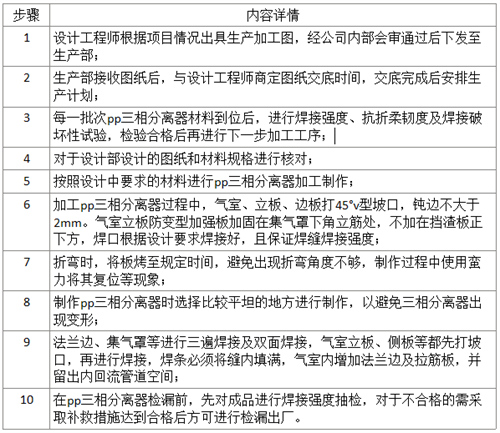
Our company designs and manufactures three-phase separators using high-strength engineering plastic PP or stainless steel, featuring a reasonable structure, high strength, and impact resistance. Taking the PP three-phase separator as an example, the production process includes the following ten steps to ensure product quality.
03Circulatory system
One major advantage of IC tanks compared to other anaerobic processes is that they utilize the biogas they generate themselves to achieve internal circulation. It consists of a lower three-phase separator, a biogas riser, a gas-liquid separator, and a slurry downcomer, using its own biogas as power to achieve internal circulation of the mixed liquid.
A good circulation system features a well-designed riser pipe that generates sufficient gas lifting power. The gas-liquid separator, located at the top, efficiently separates biogas from the mud-water mixture. The separated biogas is extracted, while the degassed mixture returns smoothly to the bottom of the reactor via a downcomer, forming a stable and continuous internal circulation. The entire process is unobstructed, effectively diluting the influent, homogenizing the water quality, and enhancing mass transfer efficiency, resulting in stable system operation and strong resistance to shock loads.
A poor circulation system: Inefficient gas-liquid separators lead to incomplete biogas separation, with some gas being drawn into the downcomer, causing gas resistance or pulsating flow and disrupting circulation stability. Intermittent internal circulation makes the system highly sensitive to changes in influent load, resulting in large fluctuations in treatment efficiency.
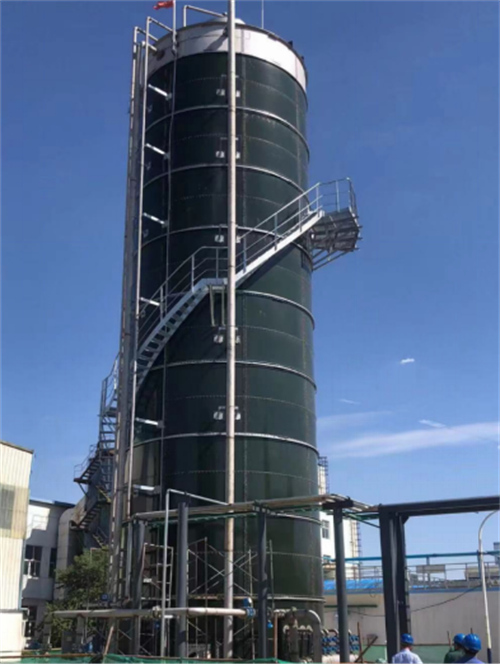
Wastewater Treatment Renovation and Expansion Project of COFCO Biochemical Energy (Hengshui) Co., Ltd.
II. Details Reveal the Truth – Easily Overlooked “Quality Traps”
Beyond the core components, the attention to detail reveals a manufacturer's sincerity and professionalism.
01 Corrosion Prevention and Insulation
High-quality tank body: The inner wall of the tank is typically coated entirely with marine-grade epoxy coal tar paint (common brands: PPG SIGMASHIELD series, Jotun equivalent series), with no fewer than 5 coats, and a film thickness of no less than 0.3mm (measured with a film thickness gauge); the outer wall of the tank is coated with anti-rust paint (common brand: Lehua), with no fewer than 2 coats, and a film thickness of no less than 0.15mm.
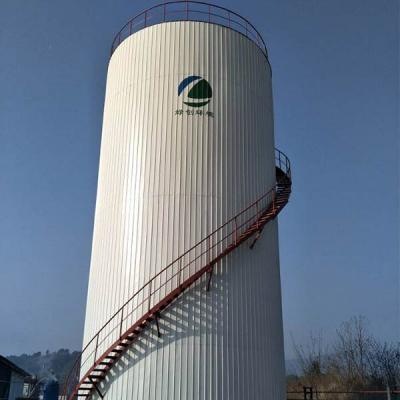
The tank insulation uses water-repellent rock wool, with a density typically ≥85kg/m³, fire rating A, and thickness ≥100mm. The outer cladding is usually made of corrugated board. Thickness measurement points are pre-installed at appropriate locations on the rotating ladder. The corrugated board has removable thickness measurement openings, no smaller than 30×30cm, for measuring the thickness of the tank wall material.
Inferior tanks: The inner wall of the tank is poorly protected against corrosion, often using ordinary or low-priced epoxy paint with insufficient coats and uneven paint film thickness, with the actual thickness measured being far less than 0.3mm. Rust, blistering, and even large-area peeling will quickly appear. The anti-rust paint on the outer wall of the tank is of poor quality, fading and chalking quickly.
The insulation layer uses ordinary mineral wool or inferior rock wool, which has a low density (usually <60kg/m³), is prone to moisture absorption and caking, leading to rapid failure of insulation performance and increased tank load. The outer corrugated plate is poorly connected and not properly sealed, with almost no consideration for later maintenance and monitoring needs, and no thickness measurement ports are provided for the tank wall, which brings great difficulties to long-term equipment safety assessment and maintenance.
02 Safety and Maintenance
Reliable design: Equipped with safety valves, water seals, flame arresters, and other devices, providing excellent protection for the flammable and explosive biogas. The tank is equipped with multiple manholes and internal ladder platforms, leaving ample space for future inspection and maintenance, greatly reducing maintenance difficulty and costs.
Deceptive design: Safety features are cut corners wherever possible, leaving huge hidden dangers. There's nowhere to step inside, and maintenance is like "demolishing the building," resulting in extremely high maintenance costs in the long run.
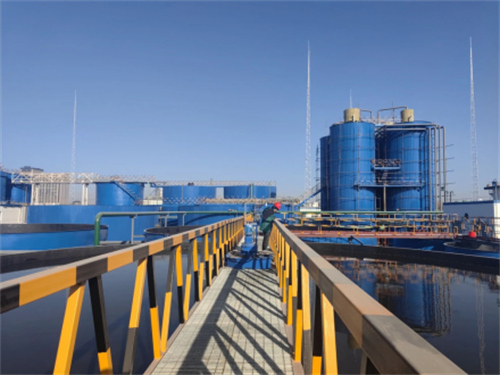
Wastewater Treatment Renovation and Expansion Project of Jinzhou Yuancheng Biotechnology Co., Ltd.
3. Process characteristics of Green Innovation LIC anaerobic reactor
High efficiency and shock resistance: The internal circulation flow rate is 10 to 20 times that of the influent, which efficiently transfers mass and dilutes the influent. The system is shock resistant and operates stably.
Uniform water distribution without clogging: The combination of multiple external pipes and internal vortex water distribution ensures uniform water distribution without clogging, enhancing radial mixing and removal efficiency.
Superior materials and long service life: Key components are made of high-strength engineering plastic PP or stainless steel, which are corrosion-resistant, impact-resistant, and have a long service life.
Stable operation and good effluent quality: Equipped with a complete monitoring system, reasonable internal structure, strong impact resistance, and removal rate of over 90% in multiple high-difficulty wastewater projects.
Low operating cost: The internal circulation has a buffering effect on pH, so even with low pH influent (as low as 3-5), less or no alkali can be added, saving on chemical costs.
Granular sludge has high activity: granular sludge grows quickly, has high strength, a wide range of microbial adaptability, a large sludge retention capacity in the system, and a high treatment load.
Rapid start-up with a short cycle: initial start-up takes 10–15 days, and secondary start-up takes only 5–10 days, quickly reaching the design load and operating stably.
Rapid start-up and short cycle: initial start-up takes 10–15 days, and secondary start-up only takes 5–10 days, quickly reaching design load and operating stably..
IV. Procurement Recommendations
Don't look at advertisements, look at case studies: Ask suppliers to provide successful operating cases similar to your water quality, and visit the site in person if possible.
If you don't understand the technology, look at the details: Carefully review the design drawings and technical solutions, paying particular attention to the three main structures and several details mentioned above.
Value over price: You get what you pay for. The savings in electricity, chemicals, and maintenance from the long-term stable operation of a well-structured IC tank far outweigh the initial price difference. It's a silent employee that "makes money" for you, not a cost center that requires constant "infusions" of capital.
In conclusion, choosing a good IC anaerobic digester is not just about purchasing a piece of equipment, but also about selecting a powerful and reliable "heart" for your wastewater treatment system. Hopefully, this article will help you develop a discerning eye and make more informed investments for your projects.
As of October this year, the company has over 300 wastewater treatment projects, with a customer referral rate exceeding 80%. In the past five years, it has completed the design, construction, and maintenance of over 60 IC anaerobic digesters. Its clients include companies such as Sinopec, China Energy Conservation and Environmental Protection Group, China Chengda Group, Sinopharm Group, Qilu Pharmaceutical, Shenghong Group, Fresh Juice, and Xiangchi Group.
If you're struggling to choose the right equipment, feel free to message us – we'll provide free water quality diagnostics and help you customize a suitable solution, ensuring every penny of your investment is well spent!
- Previous : 80,000 buyers will gather in Jinan, and thousands of exhibitors will explore business opportunities. The 16th International Bio-fermentation Exhibition in 2026 cordially invites you to attend!
- Next : Congratulations to our company on signing a contract with a Sichuan-based biotechnology company for the treatment of waste gas from distiller's grains drying.