Wastewater Resource Recovery | Unlocking the Sustainable Development of “Turning Waste into Treasure” in Industrial Wastewater
Introduction:
For a long time, the core goal of industrial wastewater treatment has mostly remained at meeting discharge standards. By investing in equipment and chemicals, pollutants are converted into solid waste sludge in exchange for compliant discharge, yet valuable substances hidden in the wastewater, such as phosphorus, fluorine, and water resources, are lost in vain. As the “dual carbon” goals and zero-waste factory policies continue to advance, wastewater resource recovery is rewriting the industry logic of industrial water treatment.
01

From “pollution control and burden reduction” to “resource value enhancement”
The industry is ushering in a new transformation
In many industrial fields such as phosphorus chemical engineering, pharmaceuticals, fermentation, photovoltaics, and landfill leachate, production processes generate large amounts of wastewater with complex compositions. Under traditional treatment models, pollutant removal is achieved through chemical dosing and precipitation. Although this can meet discharge requirements, it also exposes many practical pain points: high chemical consumption, high output of hazardous waste sludge, persistently high sludge disposal costs, and the inability to recover strategic resources such as phosphorus and fluorine contained in the wastewater, resulting in resource waste.
Policy guidance is also driving the industry's transformation. The state vigorously promotes the development of the circular economy, encourages industrial enterprises to carry out the resource utilization of wastewater, and advocates achieving pollution reduction and efficiency improvement at the source. Industrial water treatment no longer merely pursues “qualified effluent”; the two-way parallel approach of “treatment + recovery” has become an inevitable trend in the development of the industrial sector. Extracting and reusing valuable components from wastewater transforms sewage from a “treatment burden” into a “recoverable resource,” achieving a win-win outcome for both environmental and economic benefits.
02
Shandong Luchuang Environmental Technology Co., Ltd.
Create an integrated solution for wastewater resource utilization
As an engineering service provider deeply engaged in the treatment of highly difficult industrial wastewater, Luchuang Environment has seen the real-world dilemmas of a large number of projects: many enterprises achieve wastewater compliance, but each year they have to bear high chemical costs and sludge disposal costs; some enterprises possess recoverable phosphorus and fluorine resources, yet lack mature and implementable engineering technologies; old plant areas have limited renovation space and cannot directly apply brand-new complete process systems.
Abandoning “one-size-fits-all” standardized solutions, Luchuang Environment is based on the actual working conditions of projects and, centering on core directions such as phosphorus and fluorine resource recovery, biogas desulfurization, and reclaimed water reuse, creates complete wastewater resource recovery solutions.
Phosphorus and fluorine resource recovery
For high-concentration phosphorus and fluoride wastewater such as phosphorus chemical industry wastewater, phosphogypsum leachate, and photovoltaic acid washing wastewater, abandoning the traditional approach of simple precipitation for impurity removal, an integrated process of chemical precipitation pretreatment plus advanced treatment is adopted to selectively recover phosphorus and fluoride resources from the wastewater. The phosphorus and fluoride recovery rate is high, and the amount of hazardous waste sludge generated is reduced. While achieving wastewater treatment compliance, the recovered products can be reused in production, helping enterprises reduce raw material procurement costs.
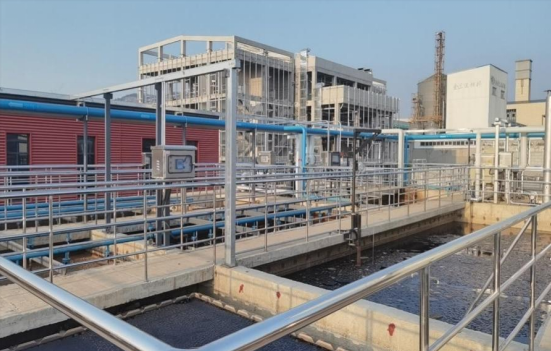
Biogas desulfurization resource recovery
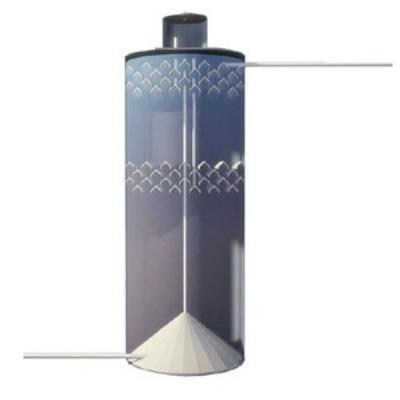
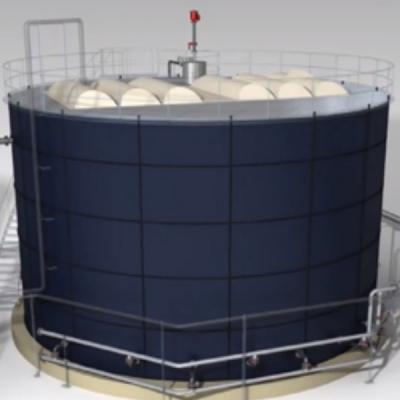
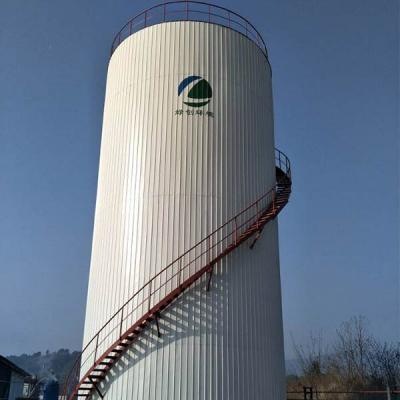
During the anaerobic treatment of high-concentration organic wastewater, a large amount of biogas is produced. Biogas contains hydrogen sulfide, which not only corrodes equipment but also pollutes the environment when emitted. Lvchuang Environment has mature and efficient biogas desulfurization technology, adopting alkaline biological desulfurization, acidic biological desulfurization, wet chelated iron, dry desulfurization and other technologies to efficiently remove sulfides from biogas, with stable desulfurization, simple operation and maintenance, and a high degree of automation. The purified biogas can be paired with steam generators, boilers, and biogas generators for resource utilization, converting the original pollutants into clean energy, reducing enterprise energy consumption costs and carbon emissions, and aligning with the requirements of dual carbon and sustainable development policies.
Reclaimed water reuse
Water scarcity, tight water-use quotas, and stricter discharge limits have become the new normal pressures for most industrial enterprises. Under conventional wastewater treatment for compliance discharge, large amounts of high-quality reclaimed water are wasted. Relying on RO and DTRO dual-membrane advanced treatment processes, Luchuang Environment conducts advanced purification of production wastewater. The treated water is stable in quality and high in purity, and can be directly reused for production make-up water, cooling circulation, equipment cleaning, and other processes, greatly reducing enterprises’ tap water intake. For plants and industrial parks with high environmental protection requirements, membrane concentration and reduction crystallization processes are provided to achieve near-zero liquid discharge of wastewater, thoroughly solving discharge challenges, helping enterprises realize closed-loop water resource circulation, and supporting the creation of green factories and water-saving enterprises.
Old plant renovation can also be compatible and adaptable, fully considering the current on-site conditions of the enterprise. The resource recovery module can be upgraded and built on the basis of the original wastewater treatment station, reusing existing equipment, reducing the enterprise's new construction investment cost, and accommodating both new projects and upgrading and renovation projects.
From water quality assessment and process design to equipment manufacturing, and then to on-site construction, installation, and commissioning, Luchuang Environment provides full-chain engineering services, refusing technical solutions that remain only at the theoretical level, so that resource recovery technology can truly be implemented and put into production.
03
Resource recovery is not a concept
It is a feasible path for enterprises to reduce costs and increase efficiency.
Resource recovery is not just a concept; it enables enterprises to pursue long-term comprehensive benefits. On one hand, it achieves environmental compliance and meets policy requirements for pollutant discharge and water conservation; on the other hand, recovered water resources and phosphorus-fluorine resources can be returned to production, reducing raw material procurement while cutting sludge disposal costs, thereby offsetting environmental operation and maintenance expenses.
Water quality varies greatly across industries, and there is no one-size-fits-all resource recovery template. Lvchuang Environment adheres to a one-enterprise-one-strategy approach, comprehensively assessing water quality conditions, site conditions, and investment budgets, balancing treatment effectiveness, recovery benefits, and operating costs, and matching enterprises with suitable implementation paths. It does not blindly pursue excessive resource recovery, taking both practicality and economic efficiency into account.
In the future, Green Innovation Environment will focus on core technologies for wastewater resource recovery, stay rooted in the front lines of industrial wastewater engineering, help more industrial enterprises achieve pollution reduction, cost reduction, and efficiency improvement, practice the circular economy through actual engineering projects, and jointly explore the path of green industrial development.
END