What are the advantages of IC anaerobic reactors over other anaerobic processes?
In the context of the continuous innovation of sewage treatment technology, anaerobic treatment process has become a key means of organic wastewater treatment due to its energy-saving and efficient characteristics. As a representative of the third generation of high-efficiency anaerobic reactors, IC anaerobic reactors show significant advantages in terms of treatment efficiency, operation stability, and energy consumption control compared with traditional anaerobic processes (such as UASB, anaerobic contact method, etc.). Here's an overview of the unique features of IC anaerobic reactors from multiple dimensions.
1. Ultra-high processing efficiency and volumetric load
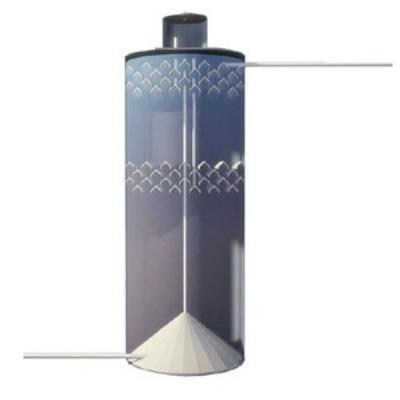
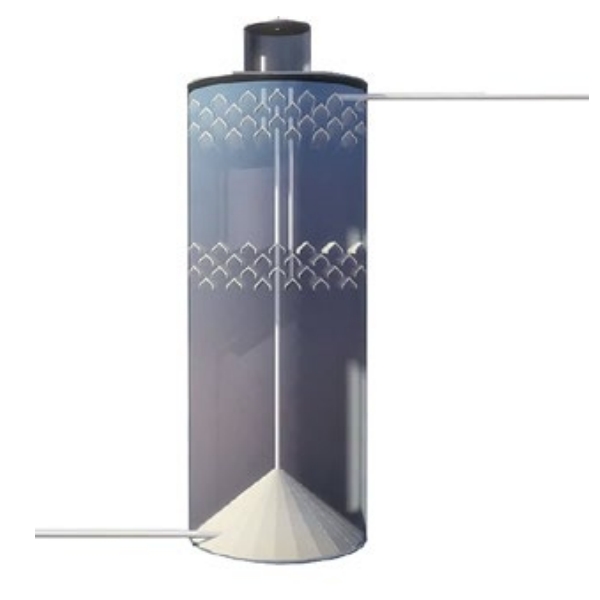
The IC anaerobic reactor achieves efficient mixing and separation of slurry water through an ingenious internal circulation design. The reactor is divided into two reaction zones: a high-load zone in the lower part and a low-load zone in the upper part. In high-load areas, wastewater is in full contact with activated sludge, and organic matter is quickly decomposed, producing a large amount of biogas. During the rise of biogas, the water flow is driven to form a strong internal circulation, so that the wastewater circulates repeatedly in the reactor, prolongs the contact time between the wastewater and microorganisms, and strengthens the mass transfer effect.
This unique design allows IC anaerobic reactors to have extremely high volumetric loads, typically 15 to 30 kgCOD/(m³·d), or even higher, compared to 5 to 15 kgCOD/(m³·d) for conventional UASB reactors. For example, IC anaerobic reactors can degrade more organic matter in a shorter period of time, greatly improving treatment efficiency and reducing the footprint of the reactor.
2. Strong anti-shock load capacity
In the actual wastewater treatment process, the quality and quantity of the influent water often fluctuate, which poses a challenge to the stability of the anaerobic reactor. The internal circulation system of the IC anaerobic reactor gives it excellent resistance to shock loads. When the influent concentration rises suddenly, the internal circulating water flow will quickly dilute the high-concentration wastewater, reduce the local excessively high substrate concentration, and avoid the inactivation of microorganisms due to impact. At the same time, a large amount of refluxed activated sludge can quickly replenish the number of microorganisms and maintain a stable treatment effect.
In contrast, traditional anaerobic processes, such as anaerobic contact method, are susceptible to impact when faced with fluctuations in water quality and quantity, resulting in reduced treatment efficiency and deterioration of effluent quality. This characteristic of the IC anaerobic reactor makes it suitable for a variety of complex working conditions, especially in the field of industrial wastewater treatment, to ensure the stable operation of the treatment system.
3. Low operating energy consumption and cost
The internal circulation power of the IC anaerobic reactor comes from the biogas generated by itself, which does not require additional power equipment to drive the cycle, which greatly reduces energy consumption. In addition, due to its efficient treatment capacity, the load on the subsequent treatment unit can be reduced, reducing the operating costs of the overall wastewater treatment system. For example, the low COD concentration of effluent treated by the IC anaerobic reactor reduces the burden on the aerobic treatment unit, reducing aeration energy consumption and dosing of chemicals.
In traditional anaerobic processes, such as UASB reactors, in order to maintain good slurry-water mixing effect, additional stirring devices are sometimes required, which increases energy consumption. When processing efficiency is insufficient, it may also be necessary to extend the processing time or increase the processing equipment, resulting in higher operating costs.
Fourth, easy to operate and easy to maintain
The IC anaerobic reactor is compact, highly automated, and relatively easy to operate and manage. There is no need for complex mixing equipment and fillers inside, which reduces equipment failure points and maintenance workload. The monitoring system can monitor the operating parameters of the reactor (such as temperature, pH value, biogas production, etc.) in real time, and the operator can adjust the operating conditions in time according to the data.
On the other hand, some traditional anaerobic processes, such as anaerobic filters, are prone to clogging and need to be cleaned and replaced regularly. The anaerobic contact method needs to set up a sludge return system, and the operation process is relatively cumbersome. IC anaerobic reactors offer significant advantages in terms of simplified operation and reduced maintenance, making them more suitable for large-scale industrial applications.
5. Good biogas recycling value
The IC anaerobic reactor produces a large amount of biogas for the treatment of organic wastewater, with a high degree of purity. Due to its efficient treatment capacity, the organic matter is more thoroughly decomposed, and the methane content in biogas can often reach 60 - 75 percent, which has a high energy recovery value. This biogas can be used to generate electricity, heat or as fuel, enabling the recycling of resources, reducing energy costs for businesses and reducing greenhouse gas emissions.
In contrast, some traditional anaerobic processes limit the recycling of biogas due to low treatment efficiency, low biogas production or low purity, and it is difficult to achieve a win-win situation of economic and environmental benefits.
IC anaerobic reactors stand out in the field of anaerobic wastewater treatment due to their efficient treatment performance, strong impact resistance, low energy consumption, and easy operation. With the increasingly stringent environmental protection requirements and the popularization of the concept of resource recovery, IC anaerobic reactors will play a greater role in industrial wastewater treatment, municipal sewage treatment and other fields, providing strong support for sustainable development.
The above article provides a comprehensive analysis of the advantages of IC anaerobic reactors. If you would like to know more about how it compares to a specific process, or if it is used in practice, please feel free to let me know.