What are the common problems in the operation of IC anaerobic reactors? How to solve the phenomenon of sludge loss or acidification?
IC (Internal Circulation) anaerobic reactor is a highly efficient anaerobic wastewater treatment technology. With its high load, high COD removal rate and impact resistance, it is widely used in organic wastewater treatment in food, papermaking, pharmaceutical and other industries. However, in actual operation, improper operation or environmental changes can lead to multiple problems. This article will focus on analyzing common operating failures of IC anaerobic reactors, and discuss in detail the causes and solutions of sludge loss and acidification.
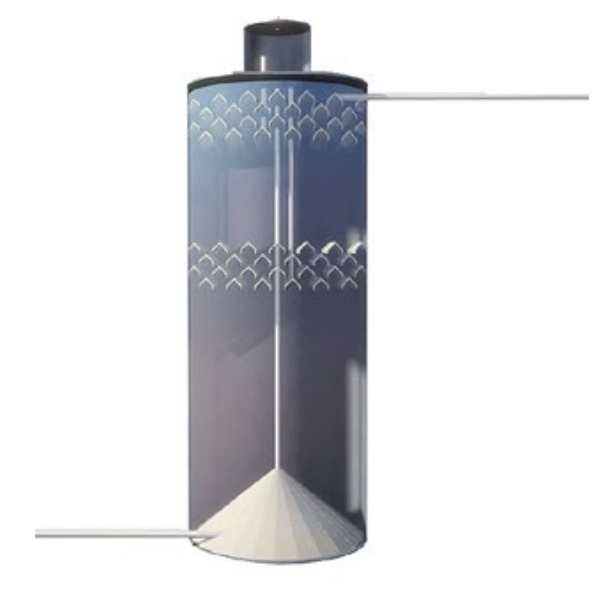
1. Common operating problems of IC anaerobic reactors
Sludge loss
Phenomenon: The sludge concentration in the reactor decreases, the effluent water is turbid, and the treatment efficiency is reduced.
Causes:
The rising flow rate is too high: the hydraulic load is too high, causing the sludge to be washed out.
Gas release is severe: When the biogas production is too large, bubbles will be flotation with sludge.
Poor sludge settlement: the granular sludge has not formed or broken, and the settlement speed is insufficient.
Systemic acidification (VFA accumulation)
Phenomenon: The pH value drops below 6.0, the concentration of volatile fatty acids (VFA) increases, and the activity of methanogens is inhibited.
Causes:
The organic load is too high: the COD concentration in the inlet water suddenly increases or the amount of water is too large, and the acid-producing bacteria are overactive.
Inadequate alkalinity: Lack of sufficient bicarbonate buffering system.
Temperature fluctuations: Low temperature (<25°C) leads to slow metabolism of methanogens.
Difficulty in forming granular sludge
Phenomenon: The sludge is mainly floc, easy to lose and has low activity.
Causes: Excessive water inlet suspension (SS), imbalance in nutrient ratio (such as insufficient N/P), or toxic substances (such as heavy metals).
Biogas system abnormality
Phenomenon: biogas production plummeted, low methane content (<50%) or pipeline blockage.
Causes: sulfide corrosion, foam entrains liquid into the air duct, or the CO₂ ratio is too high.
2. Solutions for sludge loss
Optimize hydraulic loads
Control the inlet flow rate to ensure that the rising flow rate is ≤2.5 m/h, and add a buffer flow impact of the adjustment pool if necessary.
Case reference: A starch plant used real-time monitoring of a flowmeter to reduce the flow rate from 3.0 m/h to 2.2 m/h, and the sludge loss rate was reduced by 60%.
Strengthen sludge settlement performance
Add coagulant: Add PAC (polymeric aluminum chloride, 50-100 mg/L) or cationic PAM (0.5-1 mg/L) in an appropriate amount to promote flocculation of fine sludge.
Culture granular sludge: Accelerate sludge pelletization by gradually increasing the load (increasing 0.5-1 kg COD/m³ daily) and supplementing calcium ions (200-300 mg/L).
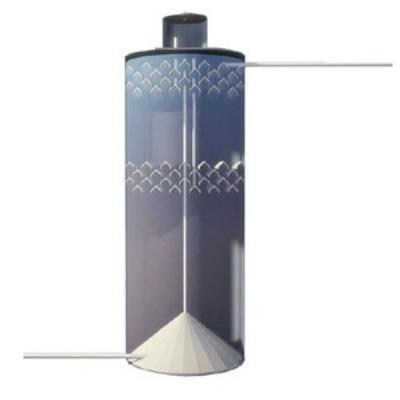
Improved three-phase separator design
Adjust the separator inclination angle to 55°-60°, increase the gas-liquid separation space, and reduce the sludge entrainment of bubbles.
Flush the separator inclined plate regularly to prevent sludge deposition and blockage.
Return sludge control
Start the sludge return system, control the sludge return volume of the second sedimentation tank to 10%-20% of the water inlet volume, and maintain the sludge concentration in the reactor (15-30 g/L).
3. Coping measures for acidification
Restore pH balance
Add alkaline substances:
Sodium bicarbonate (NaHCO₃): Add at a ratio of 0.5-1 kg for every 1 kg reduction of COD to maintain pH 6.8-7.5.
Sodium hydroxide (NaOH): Add a small amount in an emergency to avoid violent fluctuations in local pH.
Case reference: A brewery added 200 kg NaHCO₃ daily during the acidification period. After 5 days, VFA dropped from 5000 mg/L to 800 mg/L, and gas production recovered.
Adjust organic load in stages
When VFA > 2000 mg/L, immediately reduce the COD load to 30%-50% of the original value. After VFA < 800 mg/L, gradually increase the load at a daily range of 10%.
Introduce a buffer system
Add carbonate-containing wastewater (such as anaerobic digestible solution) to the inlet water, or add a limestone (CaCO₃) filter bed to enhance the system's acid resistance.
Temperature and nutrition regulation
Maintain the reactor temperature at 35-38℃ (medium temperature anaerobic) or 55-60℃ (high temperature anaerobic), with a fluctuation range of ≤±2℃.
Supplement nitrogen (C:N=20:1), phosphorus (C:P=100:1) and trace elements (Fe, Ni, Co) to promote the growth of methanogens.
4. Preventive management strategies
Real-time monitoring of key parameters
Test pH, VFA, ALK (alkaline), COD load and biogas components (CH₄/CO₂ ratio) daily to establish a data warning mechanism.
Regular maintenance of equipment
Clean the water dispenser and three-phase separator every month, and repair the sealing properties of biogas pipelines and gas cabinets every year.
Sludge activity detection
Sludge activity is evaluated through SMA (specific methane production activity) test. If SMA is <0.1 g CH₄-COD/g VSS·d, fresh sludge needs to be supplemented or the load is reduced.
The efficient operation of IC anaerobic reactors depends on refined process control. In response to the problems of sludge loss and acidification, comprehensive intervention is required in combination with hydraulic regulation, chemical regulation and microbial management. Through preventive maintenance and real-time monitoring, the failure rate can be significantly reduced and the system can be operated stably for a long time. Actual cases show that scientific load adjustment and pH recovery strategies can reverse the acidification crisis within 5-10 days, while the cultivation optimization of granular sludge can stabilize the COD removal rate above 85%.