Introduction to wastewater treatment from enzyme preparation production
In modern industrial fields, enzyme preparations are increasingly used in applications ranging from food processing to pharmaceuticals, textiles and other industries, all of which are inseparable from the help of enzyme preparations. However, the wastewater generated during the production of enzyme preparations poses challenges to environmental protection. This sewage has the characteristics of complex composition and high organic matter content. If not properly treated, it will cause serious damage to the ecological environment such as water bodies and soil. Today, let us discuss how to treat the wastewater from the production of enzyme preparations and what processes are available.
1. Production process of enzyme preparations
The enzyme preparation production process refers to the process of obtaining enzyme preparation products that meet quality standards through a series of process steps such as extraction, purification, and stabilization. The main steps are as follows:
Enzyme source screening and culture: Select suitable strains or fungal strains as enzyme sources, and obtain a large number of enzyme-producing strains through culture and propagation.
Fermentation process: Add the enzyme source to the culture medium to carry out the fermentation process. By adjusting fermentation conditions, such as temperature, pH value, oxygen supply, etc., the enzyme production can be maximized.
Enzyme extraction: Separate the fermentation broth and isolate the liquid part containing enzymes. Commonly used methods include centrifugation, filtration, sedimentation, etc. Enzyme-producing strains and insoluble impurities can be removed by these methods.
Enzyme dissolution: Dissolve the separated enzyme-containing liquid in an appropriate solution to increase enzyme activity.
Enzyme purification: Through a series of purification process steps, such as precipitation, ion exchange, gel filtration, ultrafiltration, etc., the impurities in the enzyme are removed so that the enzyme can obtain higher purity.
Enzyme stabilization: Enzymes that are easily affected by environmental conditions such as temperature, pH value, humidity, etc. need to be stabilized. Commonly used stabilization methods include freeze drying, spray drying, adding protective agents, etc.
Storage and packaging: Store and package the purified and stabilized enzyme preparation. Enzyme preparations are usually required to be stored at room temperature for a long time and maintain good activity.
Quality control: Carry out quality control on enzyme preparations, including activity determination, moisture content determination, purity determination, etc., to ensure that enzyme preparations meet relevant quality standards.
2. Characteristics of wastewater from enzyme preparation production
01Complex ingredients
There are many types of raw materials for the production of enzyme preparations, including various microbial culture medium components, such as sugars, nitrogen sources, inorganic salts, etc., and a variety of chemical reagents are also used in the extraction and purification process. This makes sewage rich in organic matter, such as unused sugars, proteins, amino acids and various intermediate products. In addition, it may also contain some trace elements, heavy metal ions and other inorganic substances. These complex components are intertwined and make wastewater treatment more difficult.
02High concentration of organic matter
During the production process of enzyme preparations, a large amount of raw materials are not completely converted into products and thus enter the sewage system. This results in high chemical oxygen demand (COD) and biochemical oxygen demand (BOD) values in sewage. High concentrations of organic matter not only worsen the biodegradability of sewage, but also produce toxic inhibitory effects on microorganisms in the treatment process, seriously affecting the treatment effect.
03Water quality and quantity fluctuate greatly
Since the production process of enzyme preparations is usually not continuous and stable, different batches of production and start-up and stop operations during the production process will cause drastic fluctuations in the quality and quantity of sewage. Changes in water quality may be reflected in organic matter concentration, composition, pH, etc.; fluctuations in water volume bring huge challenges to the stable operation of sewage treatment facilities, requiring the treatment process to have strong impact load resistance.
3. Common enzyme wastewater treatment processes
01Physical treatment process
1.1Grids and screens
Grilles and screens are installed at the front end of sewage treatment. Coarse grilles can intercept larger solid waste such as packaging material fragments, branches, etc. The spacing is usually 10-40mm. Fine grids further remove smaller suspended matter such as hair, fibers, etc., with a spacing of 3 - 10mm. With its fine pore size, the screen can effectively remove fine particle impurities, ensure the normal operation of subsequent processing equipment, and prevent clogging and wear.
1.2 Precipitation method
Gravity is used to precipitate solid particles in sewage. The advection sedimentation tank has a simple structure, horizontal flow of sewage, and stable sedimentation effect, and is suitable for large-scale sewage treatment. The vertical flow sedimentation tank has upward water flow and a small footprint. It is often used in situations where the space is limited. The radial flow sedimentation tank has a larger tank diameter, high sedimentation efficiency, and can handle higher volumes of sewage. The sedimentation method can remove solid particles with larger specific gravity in sewage and reduce the load for subsequent treatment.
02Chemical treatment process
2.1 Coagulation and sedimentation method
By adding coagulants, such as aluminum salts (polyaluminum chloride), iron salts (ferrous sulfate, etc.), to the sewage, the colloids and tiny suspended solids in the sewage are condensed into larger particles, and then precipitated and separated. The hydrolyzate of the coagulant causes pollutants to accumulate through adsorption, electrical neutralization, adsorption bridging, etc. At the same time, the use of coagulant aids can enhance the coagulation effect and increase the sedimentation speed. Accurately controlling factors such as the type, dosage, and pH value of the coagulant is the key to ensuring the coagulation and sedimentation effect.
2.2 Chemical oxidation method
The ozone oxidation method uses the strong oxidizing property of ozone to decompose organic matter in sewage, convert macromolecular organic matter into small molecules, and improve the biodegradability of sewage. Fenton's oxidation rule uses hydrogen peroxide and ferrous ions to react to generate hydroxyl radicals. Hydroxyl radicals have extremely strong oxidizing ability and can oxidize organic matter non-selectively. However, the chemical oxidation method requires attention to the dosage ratio of the agent, reaction time and reaction conditions to avoid wastage of the agent and secondary pollution.
03Biological treatment process
3.1 Anaerobic biological treatment—IC anaerobic reactor
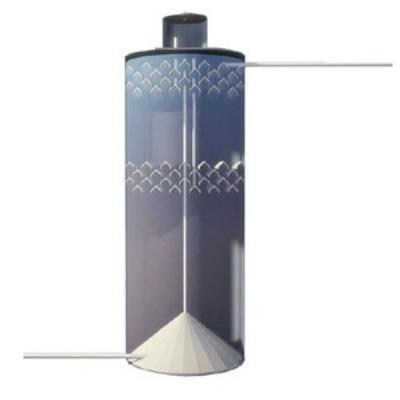
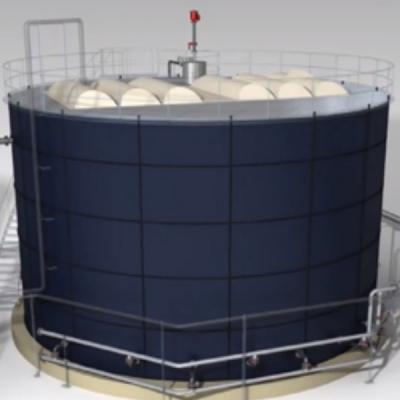
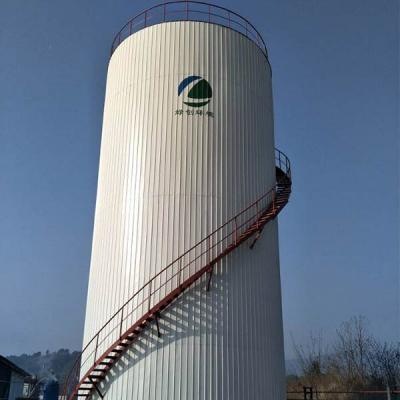
IC anaerobic reactor is an important equipment in modern anaerobic treatment technology. It consists of two reaction zones. The high concentration of anaerobic microorganisms in the bottom reaction zone can quickly decompose organic matter and produce biogas. Biogas drives the mud-water mixture to form an internal circulation, which greatly improves the mass transfer efficiency and organic matter removal capacity. It has significant advantages: it has a high organic load bearing capacity and can adapt to the impact of high concentrations of organic matter in enzyme wastewater; at the same time, the biogas generated can be recycled to achieve energy conversion.
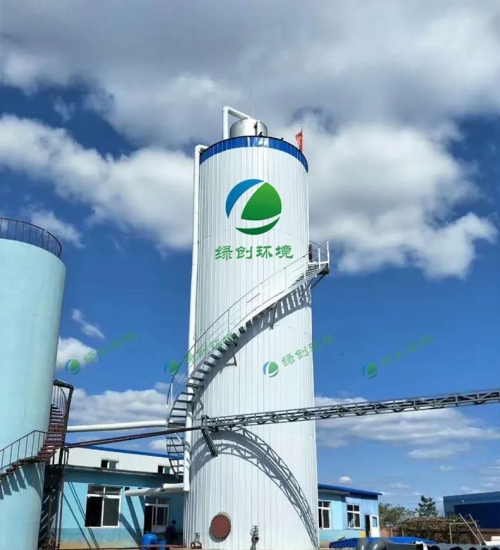
3.2 Aerobic biological treatment
The activated sludge method uses aeration to cause aerobic microorganisms to form activated sludge flocs in the sewage. The microorganisms feed on organic matter and decompose and transform it. The sequential batch activated sludge process (SBR) is flexible in operation, realizes sewage treatment through switching between different stages, and can cope with fluctuations in water quality and quantity. The biofilm method uses biofilm to adsorb and degrade organic matter in sewage, such as biological filters, biological turntables, etc. Biological filters remove organic matter through the biofilm on the surface of the filter material. High-load biological filters can improve treatment efficiency, but care must be taken to prevent clogging of the filter material.
04Ammonia oxidation process
Enzyme preparation sewage often contains a certain amount of ammonia nitrogen. The ammonia oxidation process is a new biological denitrification process technology in which anaerobic ammonium oxidizing bacteria use nitrite as an electron acceptor to oxidize ammonia nitrogen into nitrogen under hypoxic conditions. The company's independently developed modular autotrophic denitrification device is used to achieve partial nitrification of ammonia nitrogen in an aerobic environment and anaerobic ammonia oxidation denitrification in an anoxic environment by controlling parameter adjustments. Through process design, efficient removal of ammonia nitrogen and total nitrogen in wastewater is achieved.
05Depth processing technology
5.1 Membrane separation technology
Ultrafiltration membranes can remove macromolecular organic matter, colloids and bacteria in sewage. Its pore diameter is generally between 0.001 - 0.1 micron, and separation is achieved through screening. The reverse osmosis membrane can remove soluble salts, small molecular organic matter, etc., to achieve deep purification. The effluent quality of membrane separation technology is good, but it is necessary to pay attention to the problem of membrane pollution and carry out regular cleaning and maintenance.
5.2 Activated carbon adsorption
Activated carbon relies on its developed pore structure to absorb organic matter and odorous substances in sewage. Activated carbon has a remarkable adsorption effect on the refractory organic matter remaining after biological treatment. At the same time, the development of activated carbon regeneration technology has reduced operating costs, such as thermal regeneration method to desorb adsorbed substances through high temperature, chemical regeneration method to use chemical reagents to desorb, etc.
4. Process combination strategy
Combined with the characteristics of enzyme wastewater, multiple processes are often used for joint treatment. For example, the process route of "grill + sedimentation + coagulation sedimentation + IC anaerobic reactor + ammonia oxidation + aerobic biological treatment + advanced treatment". The grid and sedimentation perform preliminary solid-liquid separation, and the coagulation sedimentation reduces the concentration of organic matter and improves the water quality characteristics. The IC anaerobic reactor significantly reduces the organic content and produces biogas. Ammonia oxidation removes ammonia nitrogen from sewage, aerobic biological treatment further purifies water quality, and advanced treatment ensures that the effluent reaches standards or is reused.
Source: Internet